



Cutting Steel: Techniques and Tools for Cutting Stainless and Hardened Steel
The idea of cutting steel raises some concerns because we're talking about a tough and resistant material. Specifically, steel is an alloy composed mainly of iron and carbon where we find, in lower percentages, also other elements such as
- Manganese.
- Oxygen.
- Phosphorus.
- Aluminum.
- Sulfur.
- Silicon.
The percentage of elements that are added to the base of iron and carbon change the characteristics of steel. So we can have solutions more resistant to weathering, others with greater ductility and still others with superior hardness.
There are many types of steel, think of HSS which we use to make high-performance drill bits and cutting blades. Even steel. In fact, there are methods capable of acting on this so hard material. What are the solutions for sheet metal and thick bars? Here's how to cut steel effortlessly, even in the stainless and hardened versions.
The characteristics of steel
Before we understand how to cut steel and which tools to use, it is useful to make a quick analysis to understand what are its basic qualities. First of all we remind you that there is not just one type of steel, so the characteristics also change depending on the nature of the alloy. However, in general, steel has good hardness, so it resists concentrated stresses.
Moreover it reacts well to yield strength and any breakage due to tensile stress. If properly treated it becomes impervious to atmospheric agents and to any rust. All this becomes even more true in the face of hardened steel, much more resistant to tensile and torsional stresses, and to stainless steel. The latter is perfect for operating in oxidizing conditions and at high temperatures.
Read: which drill bits to use for extremely hard metals?
The necessary tools to cut steel
Cutting iron is one thing, doing the same with steel is another. But there is a similarity in these operations: the need to use appropriate power tools for the challenge. Let's start with the available techniques: with flame or blade, so mechanical type.
The first solution is a choice related to the thickness of the steel and to certain professional requirements: when we need to cut large quantities of very resistant steel, it's advisable to use this hot cutting technique which divides into three large sectors.
That is, flame cutting for very high thicknesses but small quantities, as happens for example in shipyards or in heavy industry, laser cutting for large numbers of thin thicknesses and plasma cutting which is positioned in a medium range. And then?
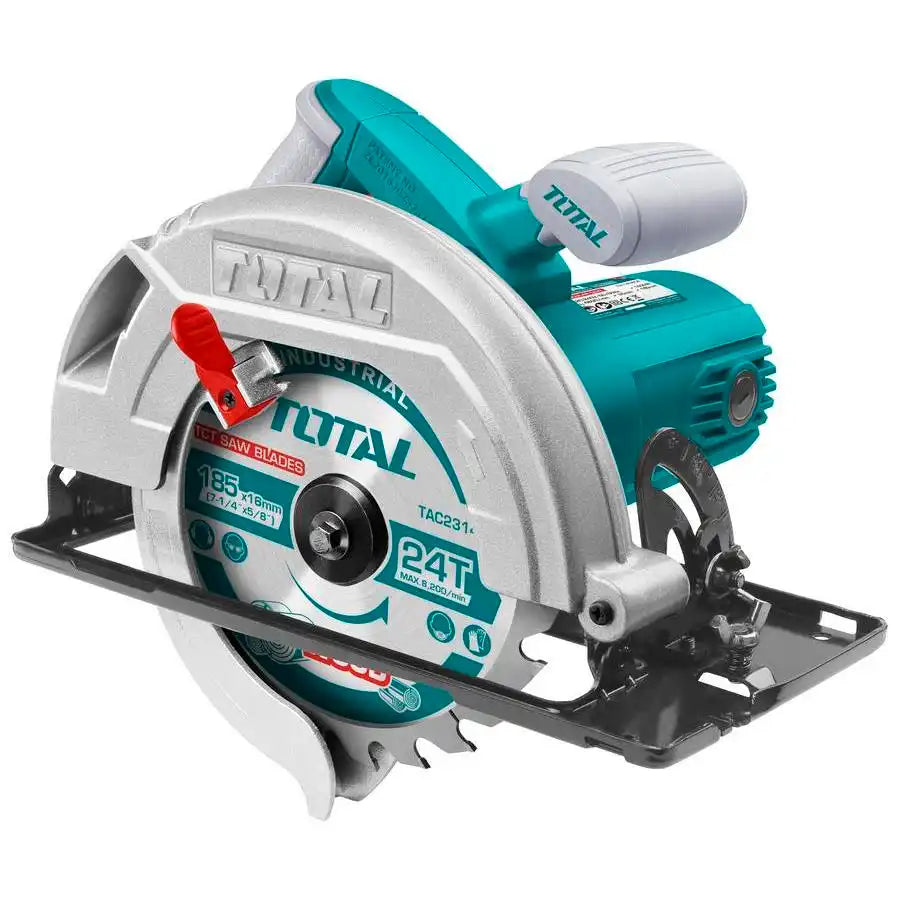
We have manual, mechanical methods that use blades: they are perfect for small work and for those who don't have industrial requirements. In this context we can use circular saws, band saws, reciprocating. Even grinders (angle grinders) can be used: it depends on the blades. There are reciprocating saws and shears for manual cutting of steel, to operate on small parts and details.
Which blades should be chosen for cutting steel?
The power tool required for this operation makes the difference, true. For example, with an angle grinder you can work in different positions, even uncomfortable ones. While with a circular saw - especially from a bench - or a band saw you must respect certain criteria. In any case, the choice of blades or discs can give the right cutting edge to your steel cutting operation.
To work this type of material you need saws and blades capable of aiming at HSS, high speed steel. We're talking about high-speed steel that can be improved by the presence of cobalt. This step allows to increase resistance to heat and wear. This means clean, precise cuts and suitable for professional work over time.
The solution proposed by Krino for its blades suitable for cutting extremely hard metal: super-rapid steel derived from the powder metallurgy process (Powder Metallurgy). This step offers high heat hardness and toughness due to the high content of alloying elements and homogeneous microstructure. The blades have high durability and greater performance over time.
How to cut steel, useful tips
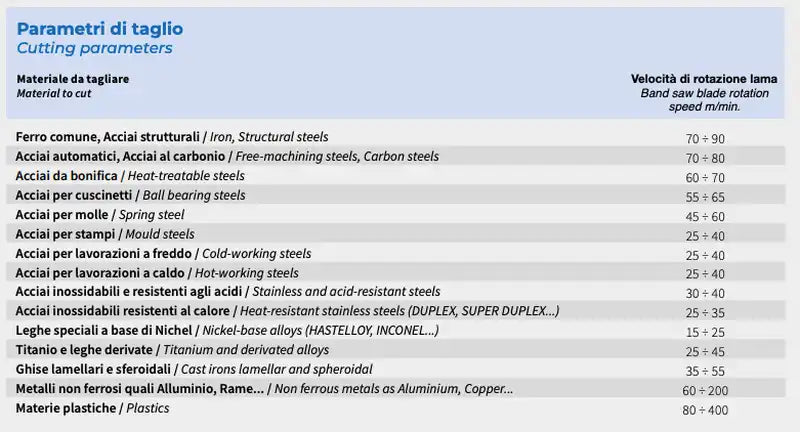
After choosing the right blade and appropriate power tool you can proceed with cutting operations. The first parameter to respect is the speed which must respect the indications of the blade manufacturer. For example, here you find the table of speeds proposed by Krino for cutting cobalt steels, for springs, bearings and other very specific uses.
In a phase of cutting the hardest steel you can also evaluate blades with tungsten or diamond cutting edge. In any case, evaluate the necessity to use cooling oil to make the operation simpler and safer in terms of the result to be obtained.


