



How to Create a Thread in a Hole or on a Screw
Making a thread means creating a shape, in a hole or on a bolt, capable of fitting with a corresponding mechanical part that has the same pattern engraved on the surface. Take as an example a nut and bolt: they come together and allow you to create a solid locking force thanks to the threading mechanism. That is, a helical groove with a precise millimeter profile that interlocks.
This happens the moment you tighten: you unite what in jargon are called male and female, with a movement (in most cases) clockwise, you create a force to close the two elements. With counterclockwise movement instead you unscrew. To succeed in this operation you must perform a threading, which needs two major ingredients: tools and technique. Here are some useful information.
Taps and dies, the threading tools
The threadings, in most cases, are expressed in millimeters. And we have two main types of work that we can perform: on rods, to create bolts or screws, and inside holes. From here depends the type of tool to use: taps and dies.
The first ones present themselves as a sort of bolt with a profile characterized by different blades (then we'll see why) that serve to create the threading in the holes. The second ones are rings that have the same principle: inside they are characterized by blades.
Blades that serve to cut the metal using different stages and passes. Manual threading - which is one of the best solutions unless there are industrial requirements - involves the presence of a wrench that is used to turn taps and dies.
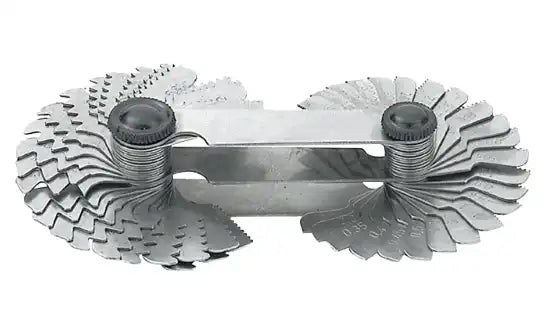
Usually, the tools for performing threading of holes and bolts are found in assorted kits that offer all the necessary pieces for the work. Maybe you can also add a thread gauge (like the one from Ineco) to have more precision in the choice of tools.
Of course, it's always advisable to choose tools made of appropriate material: the Krino models, for example, are designed for intensive uses - both with manual and machine threading - so you can find taps and dies in HSS-Co, the high-quality super-fast steel suitable for drilling and cutting operations enriched with cobalt that gives additional strength to the tool.
How to thread a hole, here's the process
Let's start with the first useful work, threading a hole. If it doesn't exist, you can create it with an appropriate drill bit and drill. Always remember that the threading process removes part of the material, so after grinding the hole will be larger.
Said this, you must choose the trio of taps for threading: each work needs three passes. The first is that of the rougher, the tap that opens the way and begins to create the profile. The second completes the work and the third refines and cleans the threading.
Tips for threading? Once you've inserted the tap wrench, keep the tool perfectly vertical and perpendicular to the hole: it's important to have quality work. Then start to move slowly, but not with a continuous clockwise movement.
Every two turns forward you make half a turn backward to break the chips. Meanwhile add lubricant for work on metal to make everything easier. Once the three passes are complete, clean everything and remove metal residue with an air jet.
Using the female die for rods and screws
The reverse process allows you to create a threading on a cylindrical metal part that you want to transform into a bolt or screw. Or into a prisoner. Also in this case you must consider that the thickness will decrease the moment the operation is completed.
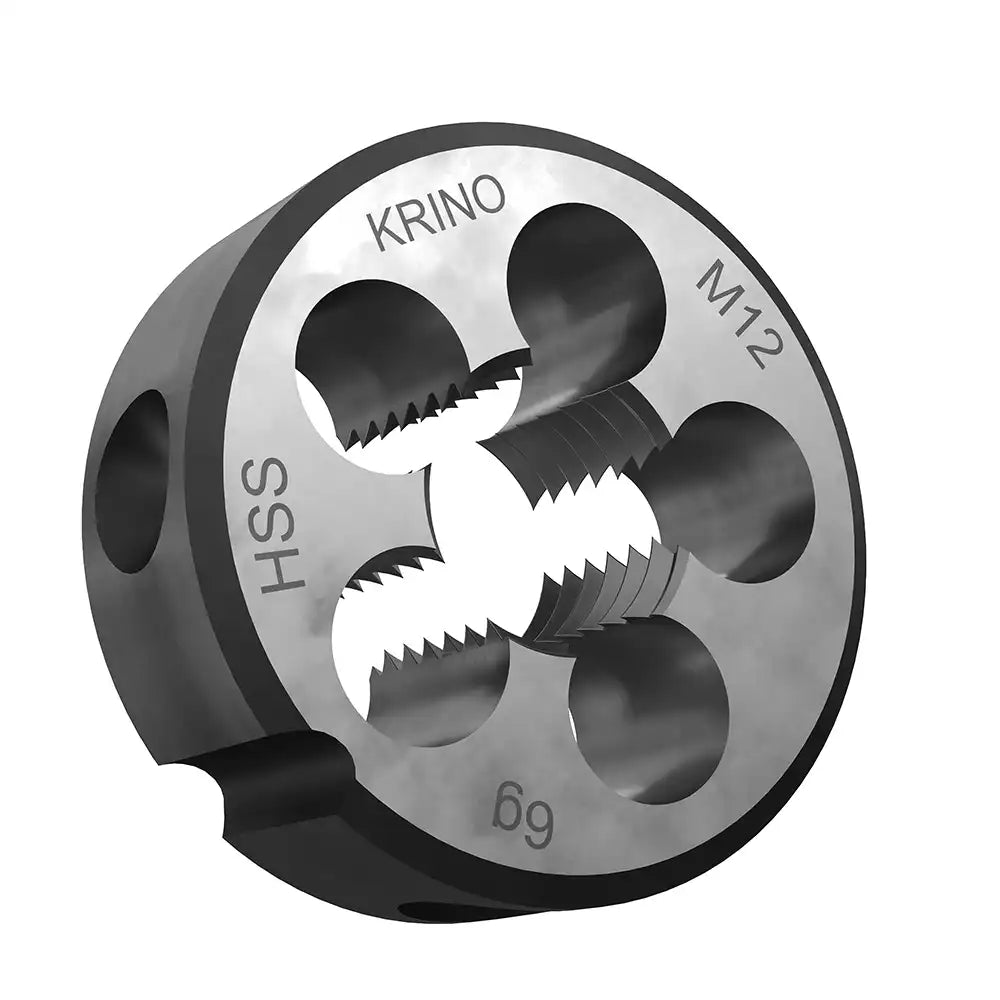
Which has the same steps of the previous threading operation in holes: you must use an appropriate female die and start to rotate. First, however, it's advisable to lightly file the edge of the rod to simplify the engagement of the die. The mechanism is similar: two turns forward, half backward and lubrication of the operation. The tools for performing this work are mounted on die holders while if you want to thread pipes it's advisable to use hydraulic sets that have a ratchet mechanism.
How to thread wood and plexiglass
This process is especially useful if you want to create external and internal threading in metal, iron and steel. The instructions and the tools are similar for threading plexiglass although this is an operation you should reserve only in extreme cases.
That is, when other joining methods fail. Indeed we're talking about a very fragile material that poorly tolerates this mechanism. To thread wood, we just need to change taps and dies since different equipment and appropriate blades are used.


