



Tips for Choosing and Buying Taps and Dies for Threading
Choosing taps and dies means guaranteeing your threading work excellent results. In mechanical workshops and on construction sites it is essential to have a complete kit of taps and dies to create a profile suitable to combine two elements by tightening and loosening. To deepen the topic you can read how to perform threading of holes and bolts in metal.
Because that's what we're talking about: tools that serve to create threading on bolts and holes, pipes and metal blocks. Thanks to taps and dies you can restore a torn profile or thread a plate to build a support. In short, it is created and repaired thanks to the good use of these tools. Which must be chosen well. Some tips for your purchases?
What are taps and dies in the workshop?
With these terms we mean tools that serve to create threading on drilled or cylindrical elements. Specifically, taps are used to create the necessary cuts to obtain threading in previously drilled holes using drill bits from Krino. This way the cylindrical element you created by drilling metal can accommodate bolts and screws and create the right strength.
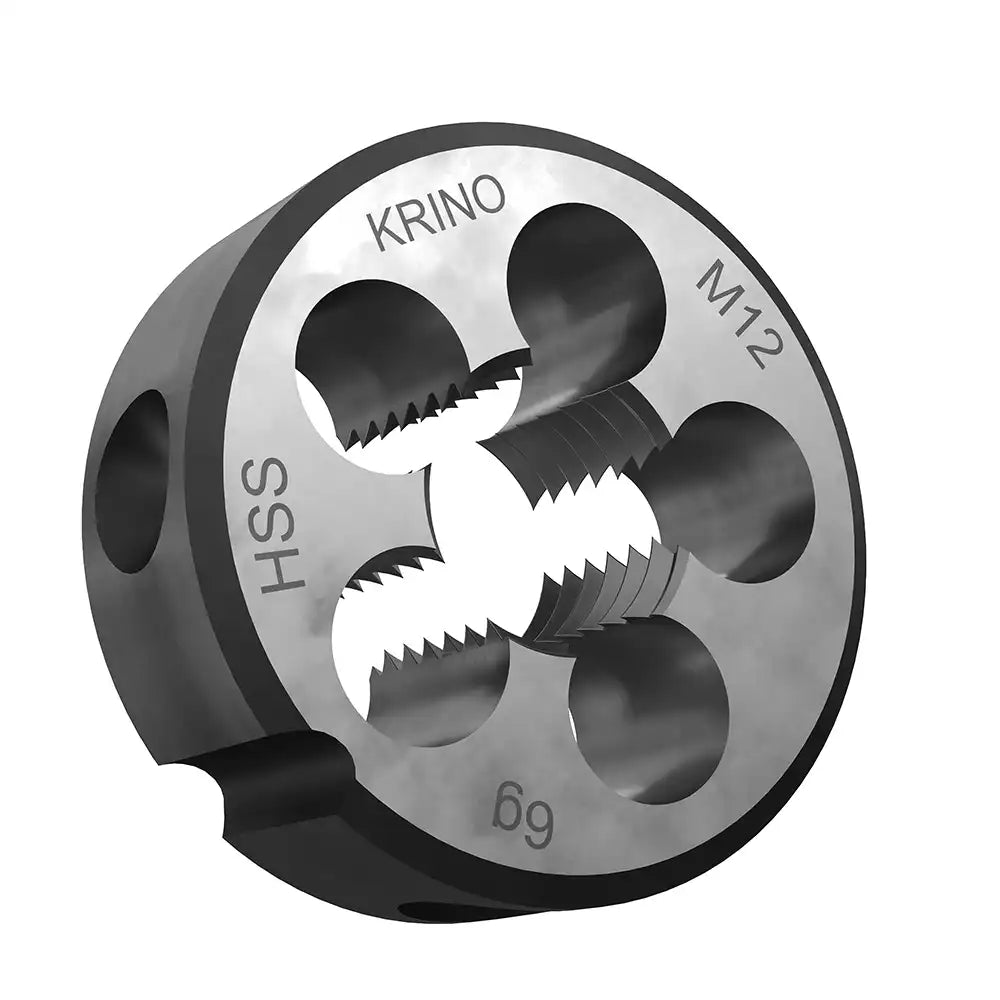
The dies are the mirrored element: they are rings with rays with blades that cut metal to create threading of different pitches on more or less thick cylindrical structures like bolts, rods and metal pipes (but also from wood).
How do you choose adequate taps and dies
There are several parameters you must respect to buy the best taps and dies for your work. First of all you must decide the dimensions, this mainly concerns the type of work you want to manage but always remember that with threading there is a part of material that is consumed. Therefore the hole will be larger and the tube or bolt thinner. Furthermore you must evaluate:
- Required depth.
- Threading pitch.
- Conicity of the result.
- Necessity or not to lubricate.
Said this, let's focus on the tap for threading holes: the first distinction we make is between those for blind holes and those for through holes. Furthermore there is a difference between chip-producing and rolling tools: the first produce chips and the second don't, so they are perfect for threading deep non-through holes where it would be difficult to remove the resulting metal.
Without forgetting that the latter offer greater durability over time. This doesn't mean you have to give up a tap capable of expelling chips well, on the contrary. It depends on the work to be done. What makes the difference in many cases is the material of realization. Which must be adequate to the challenges imposed by threading. What is the best solution for you?
What is the best steel for these tools?
The starting point is always HSS steel, perfect for incising and creating threading even when you have to work on a hydraulic pipe. Our taps and dies have a structure in HSS-Co, therefore with cobalt percentage that makes the tool more resistant and suitable for machine work, therefore with specific requirements in terms of overheating and work intensity.
In addition to the HSS-Co solution, perfect for manual work, there are also HSS-G ground, with even higher precision in the result even when you work on very hard metals like steel, cast iron, iron, bronze and much more. For those who work with machines we always recommend TiAlN structures, a coating of titanium nitride and aluminum that gives even more hardness and toughness.


