



How to Cut Wood with Precision and Safety
Cutting wood is not easy, you must use the right tools. Specifically, there is also a need for good knowledge of the procedures to be implemented. In fact, not all jobs are the same and it's not always possible to proceed in the same way.
For example, sawing a rough log is different from shaping plywood: we're still talking about cutting wood but we need to use different tools. Sometimes we need to cut wood quickly and maybe without a chainsaw but we must always do it safely and with precision. Here are some basic but always valid tips to always maintain control of what you're doing.
Study the type of wood to cut
If you want to cut, shape or modify with a cut your piece of wood you must, first of all, know the type of material you are dealing with. Starting from this point you can simplify a series of operations and proceed in the best way possible.
Certainly, when we decide to cut wood, one of the characteristics to consider is the hardness of the material and the block you want to face. That is, you need to discover what is the actual ability of the wood to resist the penetration of a foreign body.
As you can easily guess, hard wood must be treated differently than soft wood: we're not so much talking about difficulty in cutting, especially if we use power tools, but about the characteristics of the procedure. And the blade to exploit.
For example, to cut solid wood along the grain you must use a circular saw with spaced teeth to facilitate the exit of chips. If you need to recover pallets you need a blade capable of absorbing impacts with iron elements.
Identify ideal tools
To cut wood you must proceed, necessarily, with a dedicated tool. So with a toothed blade. Basically we have an essential choice: manual or electric. The first option is ideal when there are light activities to carry out, but if you need to cut large blocks of wood with absolute precision you must choose a power tool. The alternatives are different.
The jigsaw, with thin blade that moves perpendicularly, is perfect for shaping planes and cutting in straight or curved lines. For example it's perfect for plywood. The miter saw instead is used to section wood even with particular angles.
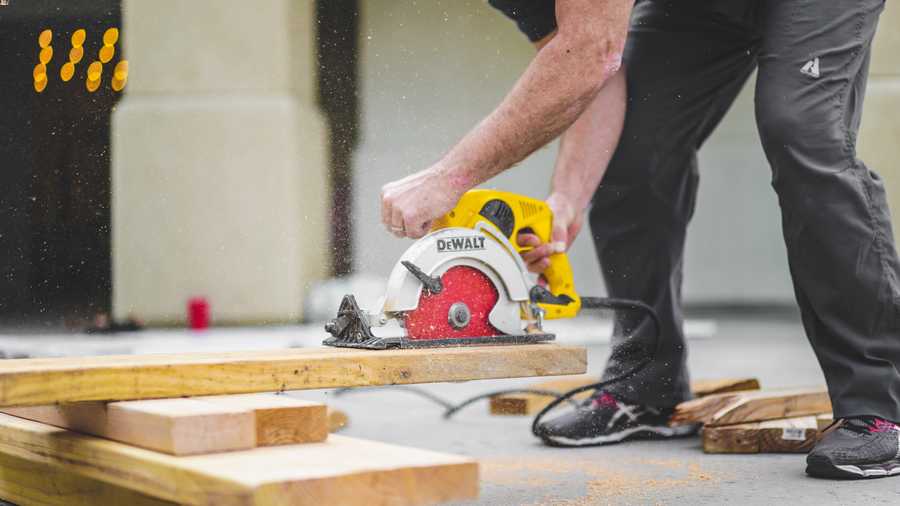
The band saw is perfect for multiple and perpendicular cuts while circular saw and table saw become essential allies for those who cut large planes and boards. To cut wood by hand you can choose between different saws, from the handsaw with wide blade and large teeth to the Japanese saw that positions itself on the opposite side thanks to narrow teeth. So suitable for precision cuts on undemanding woods. While the bow saw is perfect for cutting logs, it's the equivalent of a chainsaw.
Remember that to cut wood at 45 degrees, or anyway to make angled cuts, you need a radial miter saw with cutting adjustment or a jig that allows you to use the hand saw with a defined profile, perfect also for creating frames.
Choose appropriate protective gear
Right after choosing the right tool for cutting wood you need to focus on personal protective equipment. The PPE needed in these cases range from gloves for handling wood without fear of splinters to glasses to avoid serious eye trauma.
A helmet is necessary if you work outdoors with log cutting while headphones are essential when you operate for a long time with power tools like band saws, circular saws and chainsaws. An indispensable point: the use of push sticks to operate safely with blades that could be very dangerous for hands and fingers. Be careful how you work.
To read: how to make a hole in wood
Mount the right blade for your work
This is a fundamental point to ensure maximum efficiency for your wood cutting path. Mounting the right blade on a power tool means being able to work with the right precision and get the necessary results.

A first point to remember is this: the distance between the teeth is an essential condition for defining a certain type of result, if the blade increases it will be more effective on large cuts but less precise. Also you should always buy products based on quality steels and first-rate workmanship. Some concrete examples? Just take a look at the wood section of Krino and the official catalog.
Secure the wood and make the first cut
After performing all the checks and mounting the right blade for the type of work to be performed, and after you have also chosen the power tool or hand saw to operate on your piece, you can proceed with cutting. The basic tips are always the same.
How do you cut wood? Proceed with the locking and / or positioning of the piece on a workbench. Mark the cutting points and proceed by bringing the wood or blade closer. The execution speed is directly proportional to the softness of the wood.
Cut the wood without damaging it
To cut wood, both ordinary and harder or thicker models, you need technique. It takes just a moment to damage the raw material: here are some cases to consider to obtain a final result worthy of a structured professional carpenter.
How do you make straight cuts in wood?
The professional techniques for making wood cuts impose a series of attention on this point. First of all, you need to mark the cut line well with a pencil and a square - and many already make mistakes here because they go by eye.
The guide is decisive if you use a circular saw: you can improvise one with a straight batten locked with clamps. The blade must be sharp and the right size for the wood thickness. For hand saws maintain a constant angle and don't force.
Cutting wood without chipping
The number of teeth on the blade you are using to shape the piece of wood or cut the log makes a difference: the more there are, the less aggressive the cut will be and the less chipping there will be. Then there's the adhesive tape trick: put a strip on the cut line before marking, then cut through the tape - this keeps the wood fibers compact preventing chipping.
Another method: make a superficial cut first, a groove that breaks the fibers in a controlled way instead of letting them tear. Make a light cut first to create a groove that acts as a guide, so you avoid the blade slipping. Remember to support the piece you are cutting towards the end, if it bends it ruins all your work: it's easy to end up with chipped pieces of wood.
How to cut wood without splitting it
Maintain a medium speed, not too high, and make sure you have a sharp blade. And don't cut wet or too dry wood. Damp wood deforms and splits easily, too dry wood becomes brittle and subject to cracks that damage your work. These rules have an exception: for hard woods like oak or beech it can be helpful to lightly wet the cut line to soften the fibers. In any case it's always advisable to do a test with a piece you don't need, so you can check the final effect.
Finish and clean the wood work
Have you made your cut? You can further work the profile to clean up the area. If you've chosen a fine-tooth blade it will be simpler than a wide one, usually used for roughing. After making the main cut, it's possible to refine it with a file or sandpaper to obtain a smooth and uniform result. Then you can proceed with further processing.


